MDF Workshop — an Arabic ERP for board workshops in Algeria
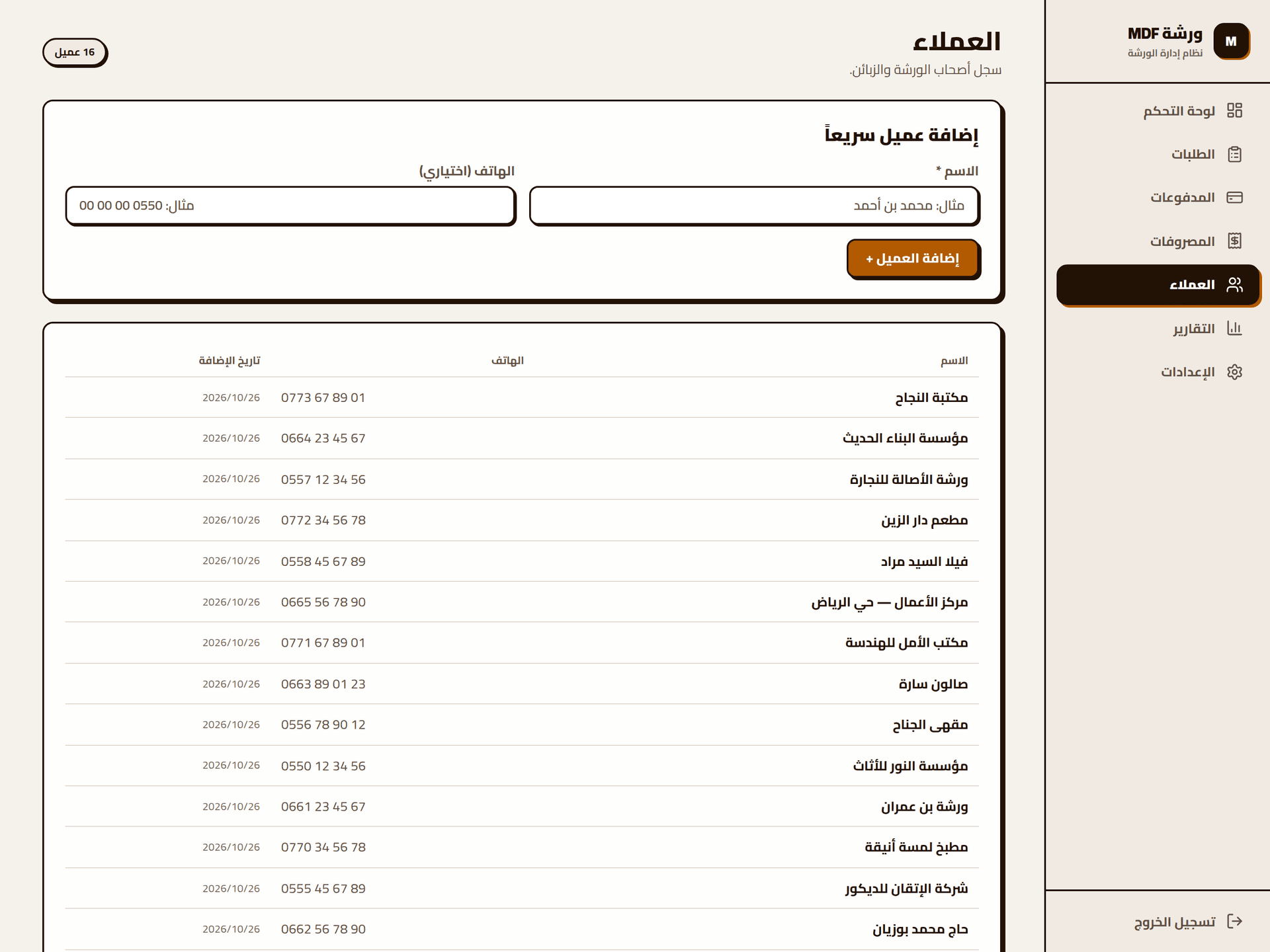
A workshop management system for Algerian MDF board workshops: clients, sequentially numbered orders, payments, categorized expenses, date-range reports with XLSX and PDF export, and JSON backups — in Arabic RTL, installed as a PWA.
Related service:ERP systemsWeb applications
The problem
A workshop orders boards, cuts them to measure, delivers, and gets paid in instalments. The records for all four steps lived in a notebook and a spreadsheet: no single figure for the month, no list of what is still owed, and no way to answer "which order is late" without rereading every page.
What we built
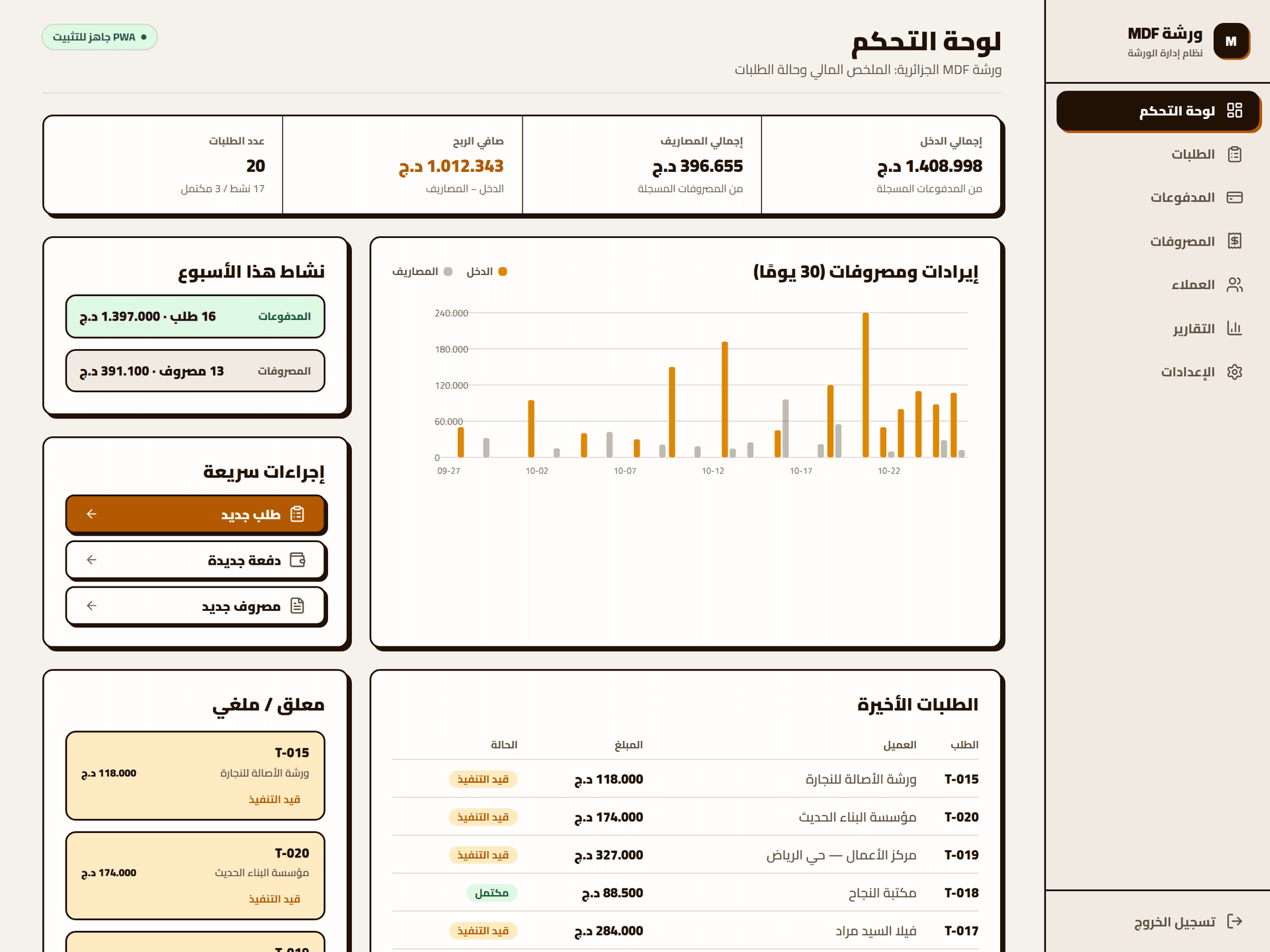
- A dashboard that totals income, expenses and net profit from the recorded payments and expenses, then plots 30 days of both — bucketed by the date the money moved, not the date the row was typed.
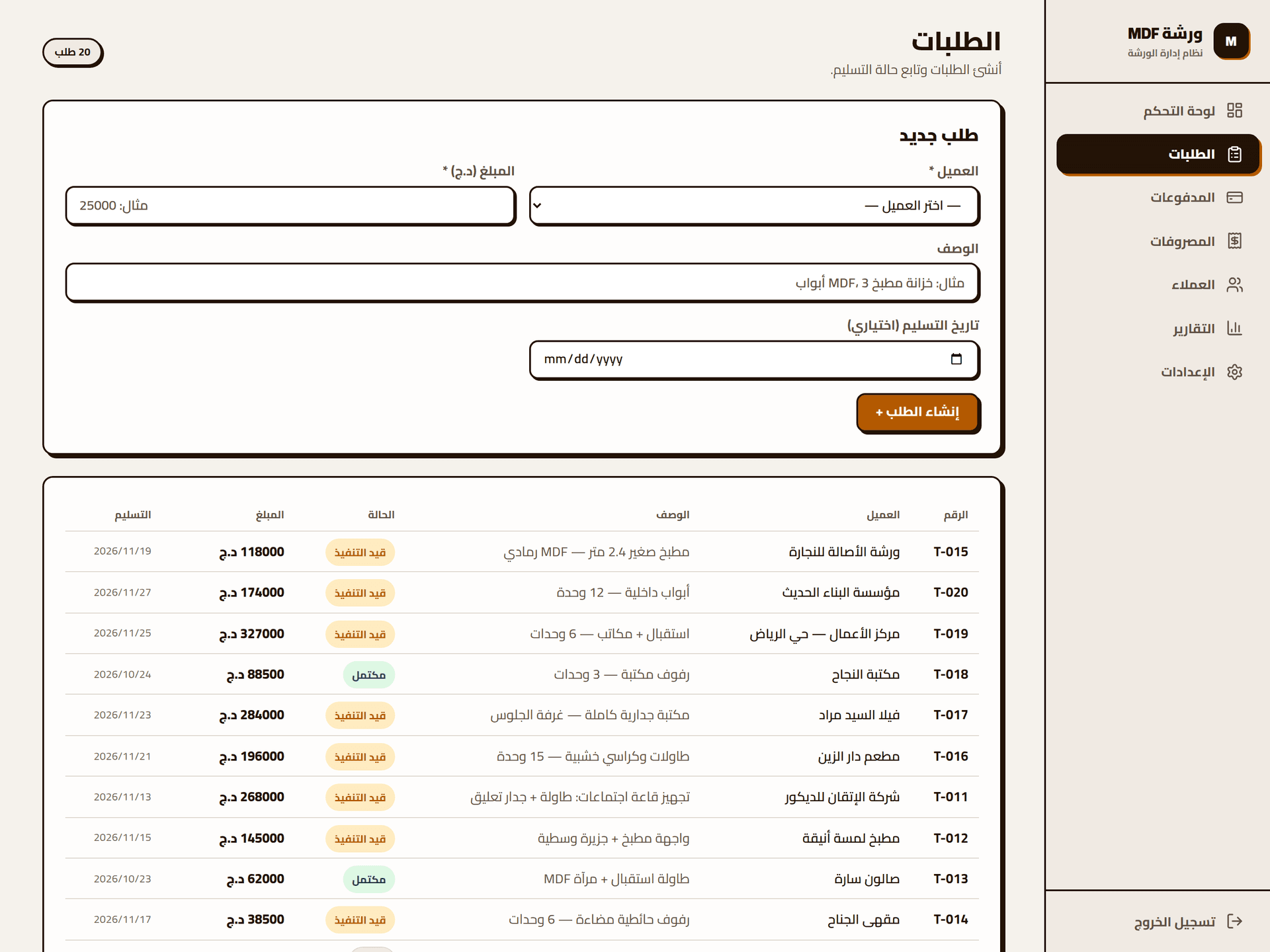
- Orders with automatic sequential numbers (T-001, T-002 …), a client, a description, an amount, a delivery date and a status of in progress, completed or cancelled.
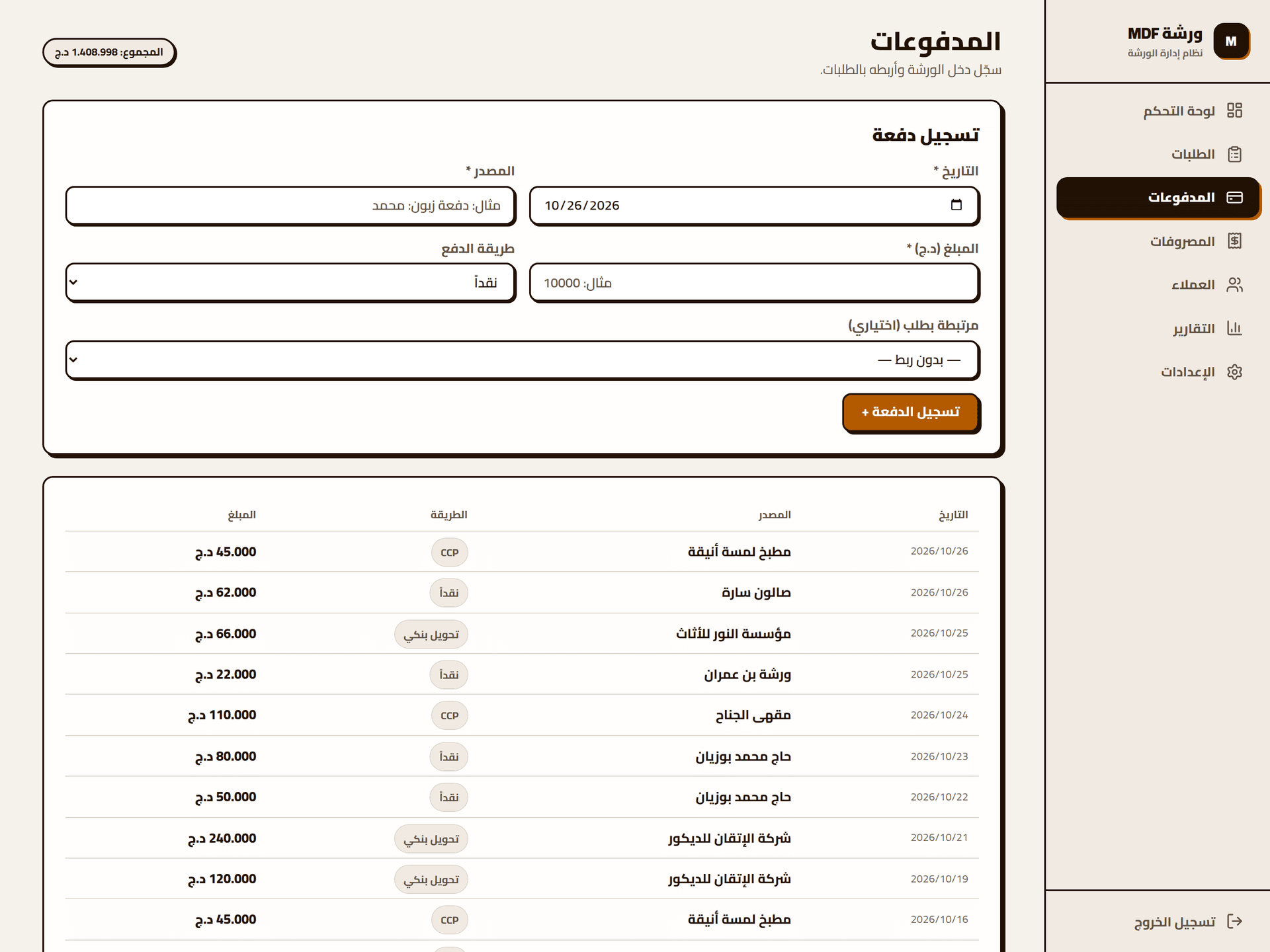
- Payments recorded against a source and a method — cash, CCP or bank transfer — optionally linked to the order they settle, so an instalment has a home.
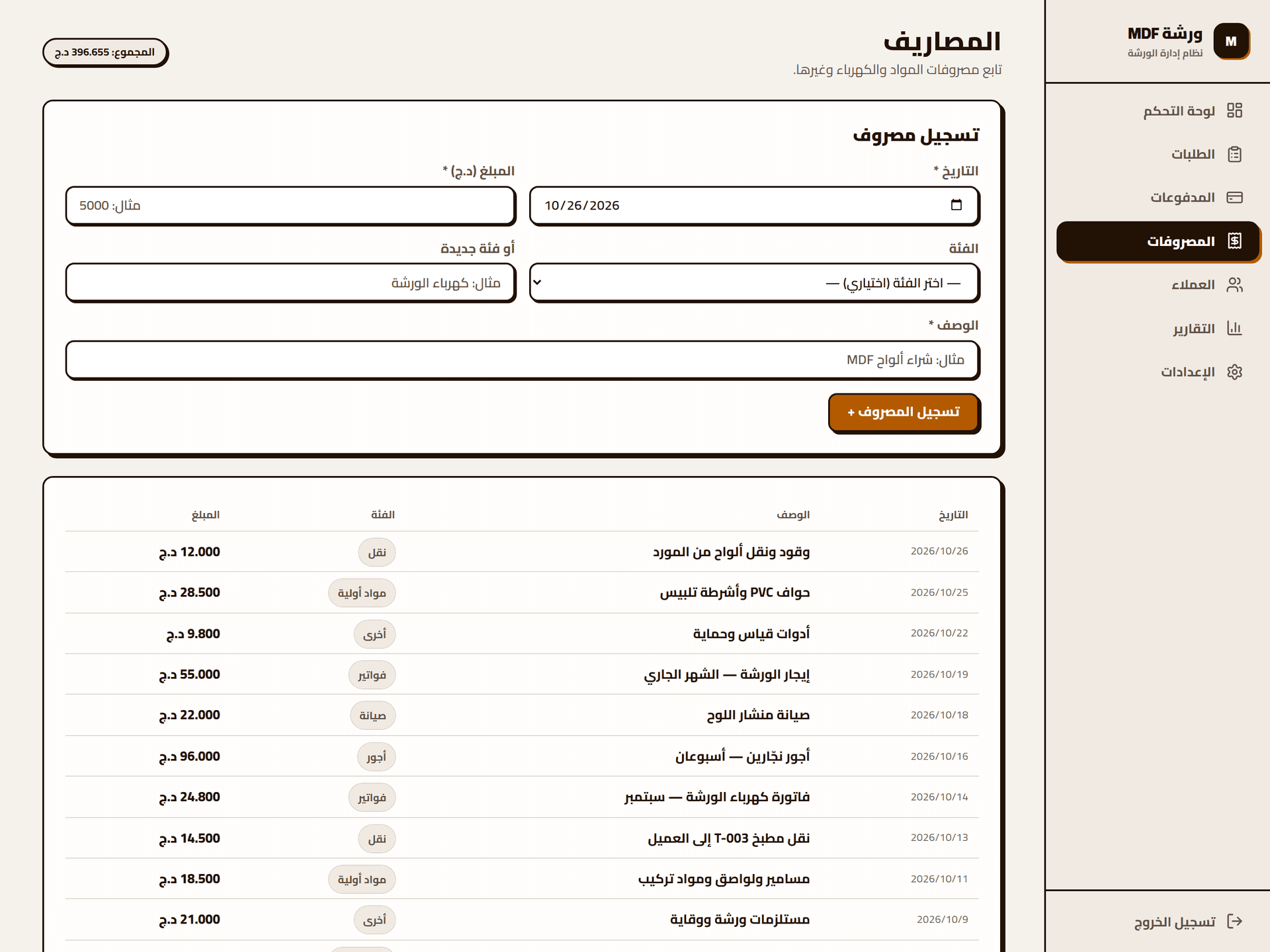
- Expenses filed under categories the workshop controls — raw materials, bills, wages, maintenance, transport — and a category can be created inline while the expense is being entered.
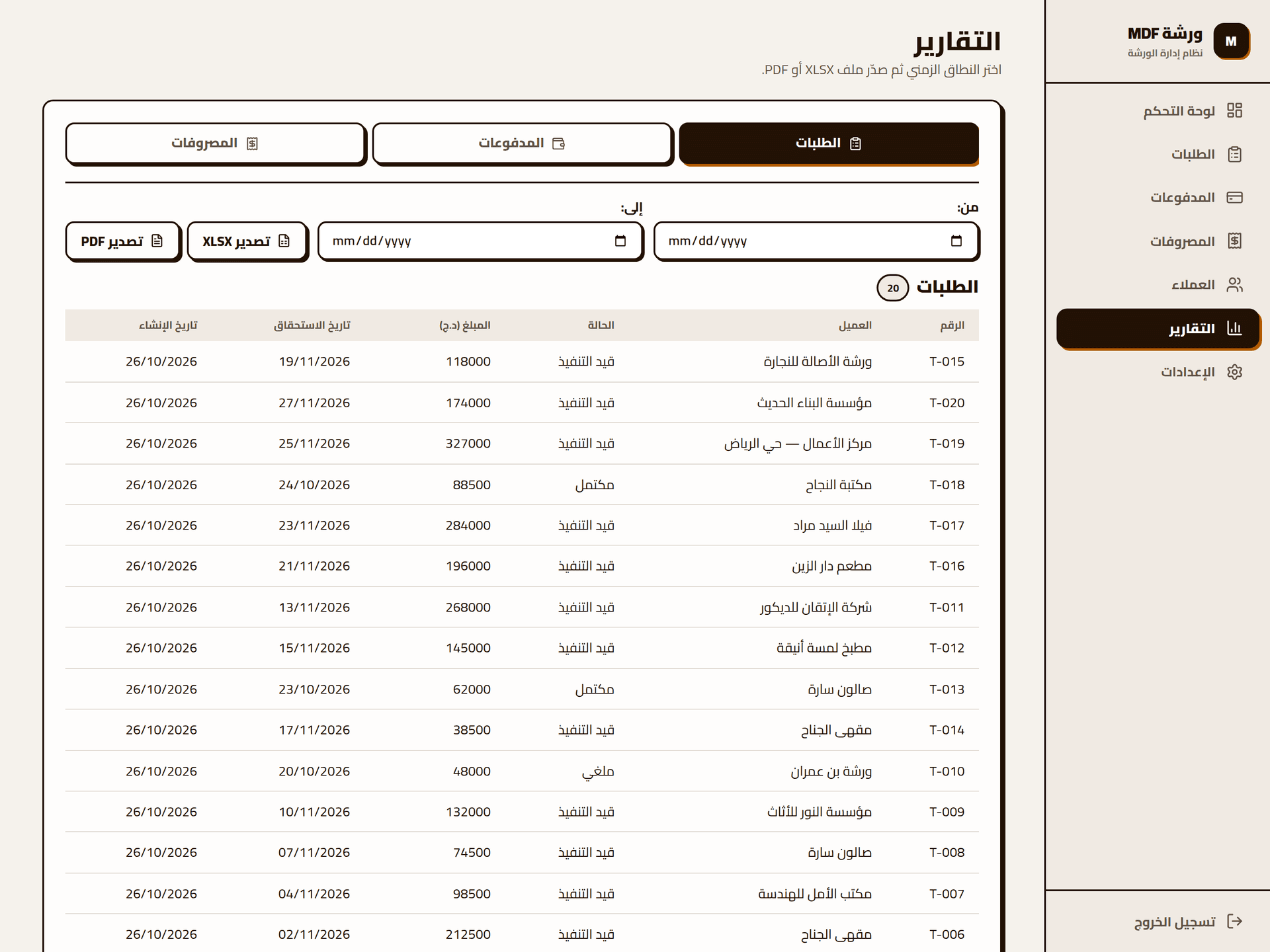
- Reports for orders, payments or expenses over any date range, exported to XLSX and PDF, with statuses and payment methods written in Arabic in the file, not as database values.
- A full-workshop backup as JSON and a restore, plus operator accounts with an admin role for creating accounts and resetting passwords.
- Arabic RTL as the only direction, in a neobrutalist skin — bold yellow on warm surface, thick ink borders, hard shadows — installable as a PWA and sized for a counter tablet.
What changed
Every order, payment and expense now lands in one Arabic interface, so the month's profit is a number on the first screen instead of an evening with a calculator. The reports leave as the two files an accountant accepts, and the JSON backup means the workshop's history is not tied to one machine.
Screenshots